The success of technology projects depends on more than the systems used, the budget allocated, or the plans put in place. Bringing in the right technical expertise at the right time also has a direct impact on project outcomes.
When organizations lack the expertise required for areas such as technology transformation, cloud architectures, artificial intelligence and intelligent automation, cybersecurity, data analytics, and business intelligence, projects may be delayed, existing teams may face heavier workloads, and operational risks may increase. When critical roles remain unfilled for too long, it becomes harder to achieve the expected results from technology investments on schedule.
That is why quick access to the right IT professionals is more than a hiring issue. It is a strategic requirement that affects project continuity, cost control, and an organization’s ability to adapt to changing needs.
What Is a Skills Gap in Technology Projects?
A skills gap is the difference between the knowledge and experience a technology project requires and the capabilities available within an organization’s existing team. This does not always mean there are too few employees. Even a team with sufficient headcount may lack experience with a particular technology, platform, or area of expertise, making it difficult for the project to move forward.
For example, a team working on a cloud transformation project may have experience in systems administration but lack hands-on experience with the architecture, security requirements, or migration processes of the cloud platform being used. Similarly, data analytics, database optimization, and cybersecurity projects may require expertise in specific technologies and application areas.
Skills gaps in technology projects most often arise in the following areas:
Technology transformation and modernization
Cloud transformation and cloud architectures
AI roles and intelligent automation
Cybersecurity and data protection
Data analytics and business intelligence
It is not always possible or necessary for organizations to maintain every technical skill they may need in-house. Some expertise may be required only at a particular stage of a project or for a limited period.
Why Is the Technology Skills Gap Growing?
As technology evolves rapidly, technical roles are becoming increasingly specialized. Responsibilities that were once grouped under a single position may now fall into distinct areas requiring different knowledge and experience. This makes it harder for organizations to find professionals with the skills they need.
Growing demand for qualified IT professionals can also lengthen traditional recruitment processes. Project-based requirements, seasonal workloads, and digital transformation initiatives can cause staffing needs to change quickly.
The main factors contributing to the skills gap include:
Rapid changes in technology and platforms
Increasing specialization of technical roles
Growing demand for qualified IT professionals
Long recruitment and technical assessment processes
Project requirements that change over time
In-house teams working on multiple projects at once
A limited pool of candidates with hands-on experience in specific technologies
In these conditions, a workforce strategy based solely on permanent hiring may not always respond quickly enough to the changing needs of technology projects.
The Cost of Delayed Access to the Right IT Professional
When a critical technology role is not filled on time, the impact extends beyond the delay to that individual task. It can affect connected project stages, the way existing teams work, and the organization’s operational goals.
When organizations lack the expertise required for areas such as technology transformation, cloud architectures, artificial intelligence and intelligent automation, cybersecurity, data analytics, and business intelligence, projects may be delayed, existing teams may face heavier workloads, and operational risks may increase. When critical roles remain unfilled for too long, it becomes harder to achieve the expected results from technology investments on schedule.
Delayed access to the right professional can lead to:
Delays to project launches and delivery dates
Increased workloads for existing teams
More technical errors and rework
Greater security and business continuity risks
Project budget overruns
Delays in bringing products and services to market
Overreliance on key employees
Delayed benefits from new technology investments
That is why skills requirements should be identified during the planning stage, rather than after a project has started. Organizations should assess in advance which roles can be filled internally and where external specialist support may be needed.
How Do Outsourcing and IT Staffing Models Help Close the Skills Gap?
Outsourcing and IT staffing models help organizations access the technical professionals they need without increasing their permanent headcount. Depending on the project’s scope and duration, specialists can join existing teams on a project-based, part-time, or long-term basis.
This approach gives organizations greater flexibility, especially when a project requires specialist support at short notice. Once the required role and technical skills have been defined, suitable candidates can be identified, assessed, and placed on the project through a more structured process.
Outsourcing and specialist staffing models can offer organizations the following benefits:
Faster access to the expertise they need
The opportunity to work with candidates whose technical skills have been assessed
Resource planning aligned with the project schedule
Support for existing team capacity and changing workloads
Project-based, part-time, or long-term engagement options
Cost and scaling flexibility for roles that do not require permanent hiring
The goal is not simply to fill an open position. It is to match the project with a professional whose technical expertise, industry experience, and working style meet its requirements.
When Should You Consider Outsourced IT Staffing?
The same staffing model may not suit every technology need. Direct hiring may be appropriate for permanent, ongoing roles, while outsourced IT staffing can offer greater flexibility for time-limited projects or situations that require a rapid increase in capacity.
This model may be worth considering when:
A specialized technical skill is not available in-house
A critical role needs to be filled quickly
Existing team capacity is temporarily insufficient
The organization is carrying out cloud migration, data transformation, or system modernization projects
Long recruitment processes put the project schedule at risk
The organization wants to increase team capacity without adding permanent headcount
Advanced expertise is required at a particular stage of a project
The duration of the need is not the only factor. The role’s strategic importance, the knowledge that should be developed in-house, and the risks associated with the project should also be considered.
Project-Based Specialist Support vs. Permanent Hiring
Permanent hiring and project-based specialist support do not have to be alternatives. Organizations can use both models to meet different needs.
Permanent hiring may be better suited to roles that are continuously needed to support an organization’s long-term goals and contribute to its institutional knowledge. Project-based specialist support offers greater flexibility for a specific technology, deliverable, or temporary capacity requirement.
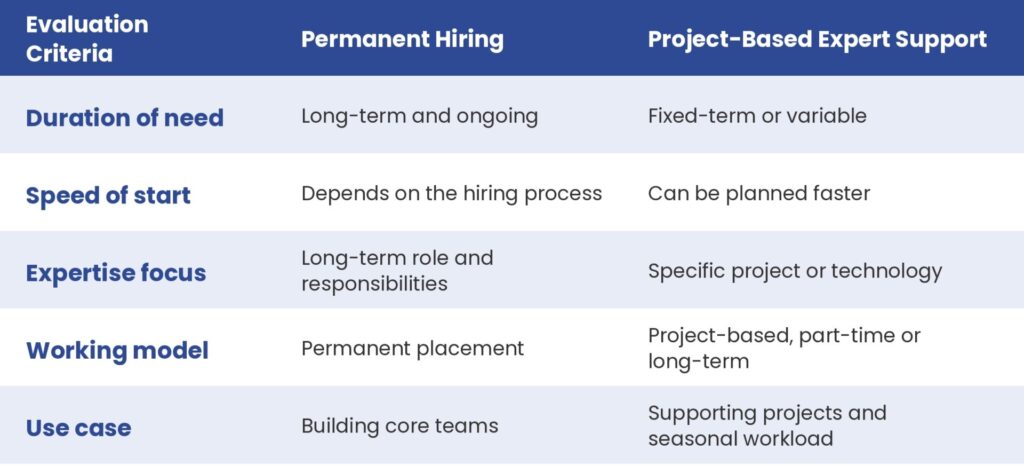
When choosing the right model, organizations should consider not only cost, but also the project’s duration, the nature of the required expertise, and how soon the professional needs to start.
How to Build a Successful Outsourcing Model
To get the expected value from external specialists, the process should not end with candidate placement. Every step—from defining the need to monitoring performance—should be planned carefully.
A successful engagement starts with clear project objectives, role responsibilities, and expected outcomes. The working arrangement and staffing model should then be selected to match the need.
The key steps include:
Analyzing the project’s technical and operational requirements
Clearly defining the required role and skills
Choosing a project-based, part-time, or long-term engagement model
Assessing candidates against technical and behavioral criteria
Integrating the selected professional into the existing team and workflows
Defining responsibilities and success criteria
Monitoring performance regularly
Planning knowledge transfer and documentation
Communication between the external specialist and the in-house team should also be established from the outset. Regular meetings, clear areas of responsibility, and measurable objectives help make collaboration more effective.
Technology Projects Move Faster with the Right Expertise
When skills gaps in technology projects are not addressed in time, they can lead to a range of issues, from project delays to operational risks. Quick access to the right IT professionals helps organizations protect project timelines, support existing teams, and manage technical risks more effectively.
Outsourcing and IT staffing models can provide project-based, part-time, or long-term support in areas such as technology transformation and modernization, cloud transformation and cloud architectures, artificial intelligence and intelligent automation, cybersecurity and data protection, data analytics, and business intelligence. Success depends on accurately assessing the need, evaluating candidates’ technical skills, and matching the right professional to the right project.
With experience across different industries and a strong candidate network, InspireIT helps organizations access the IT professionals they need quickly and flexibly. Through a selection process focused on technical assessment, we help identify candidates who meet the requirements of each role. We offer solutions tailored to organizations’ project and operational needs through outsourcing, payroll, and permanent placement models.
To identify the expertise your technology projects require and assess the right engagement model for your team, learn more about InspireIT’s Outsourcing and IT Staffing Services.