In enterprise AI agent projects, the first decision is not which model to use. First, you need to define what the agent will do, which data it will access, and which actions it will be able to perform on its own. Projects that begin without these boundaries in place may produce a successful demo, but moving the solution into everyday workflows becomes more difficult.
An AI agent can access information, use tools, and initiate actions within its defined permissions to carry out an assigned task. For example, it can classify a customer request and route it to the relevant team, or prepare an answer to a question using enterprise data. The project therefore needs to be assessed not only in terms of response quality, but also in terms of integration, data security, control, and measurement requirements.
1. What Business Problem Will the AI Agent Solve?
“We want to use an AI agent in our company” is not a project objective. The objective should identify where time is being lost in the current process or which requests are not being handled quickly enough.
For example, handling recurring customer service requests, accessing internal knowledge, and preparing data queries are different business problems. Each requires different data sources, integrations, and success criteria. When selecting the first use case, the following questions should be answered:
- Who currently carries out each step in this process?
- Which step accounts for the most time lost or the most errors?
- Is the agent expected to provide information, make recommendations, or perform an action?
- What would a successful outcome look like for the user and the organisation?
A narrowly scoped, measurable use case also makes it easier to identify the project’s technical requirements.
2. Which Data Does It Need to Access?
An agent may need access to relevant enterprise knowledge to produce accurate responses. However, customer records, product documentation, transaction histories, and internal company documents should not all be treated as having the same access requirements.
Before the project begins, the data sources to be used should be reviewed for currency, ownership, and access permissions. The agent must be prevented from accessing information on behalf of an employee who cannot view it, or from including records beyond that employee’s permissions in its responses. Particularly where personal and sensitive data are involved, the data to be processed and how long it will be retained must also be defined. NIST’s approach to AI risk management likewise centres on assessing the context of use, data, and risks throughout the project.
3. How Will It Work with Existing Systems?
The value an AI agent delivers often depends on how it interacts with existing systems. It may need to retrieve information from systems such as CRM, call centre, document management, or data warehouse platforms. In some projects, reading information alone is not enough; actions such as creating, updating, or routing records also come into play.
At this point, the direction of integration must be clearly defined: which systems will the agent read data from, and which will it be allowed to write data to? What will it show the user if a system is temporarily unavailable? How will an interrupted operation be tracked? The answers to these questions directly affect the scope of the pilot and the technical architecture required.
4. Which Actions Can It Perform on Its Own?
Answering a question and changing a customer record do not require the same level of permission. The agent’s actions should therefore be differentiated according to their impact. Tasks such as searching for information and creating drafts require different controls from actions such as deleting data, changing permissions, or sending a binding response to a customer.
For high-impact actions, human approval, restricted tool access, and action logs should be part of the design. Giving the agent only the permissions it needs for its task helps limit the impact of unintended actions.
5. How Will We Measure Success in the AI Project?
An impressive demo does not demonstrate that a solution will succeed in everyday use. To enable measurement, the current state should be documented at the start of the project. Metrics appropriate to the use case can then be selected, such as request resolution time, correct routing rate, cases requiring human intervention, user satisfaction, or cost per operation.
Incorrect or incomplete responses should also be included in the evaluation. In particular, the agent’s ability to acknowledge when it cannot answer and to pass a request to a specialist when necessary forms part of measuring success. Tests need to be based on real use cases and repeated as the system changes.
6. Who Will Manage Operations After the Pilot?
Work on an AI agent project does not end when it goes live. Knowledge sources are updated, processes change, and new user requests emerge. Responsibility for keeping content up to date, managing access permissions, monitoring performance, and resolving issues should therefore be defined from the outset.
Starting with a single use case, running a pilot with real users, and expanding the scope based on the results provides a more manageable path. At the end of the pilot, the focus should be not only on what the agent can do, but also on the conditions under which it works reliably.
The Right Roadmap for Your Enterprise AI Project with InspireIT
The scope of an enterprise AI project is shaped by the business problem it aims to solve. Managing calls, querying enterprise data, and protecting sensitive information require different data sources, permissions, and integrations.
InspireAI Call Center manages inbound and outbound calls through natural conversations. It understands customer requests and gathers relevant information, integrates with enterprise systems, and can initiate and complete defined actions. Call recordings, summaries, and call analytics also make it possible to monitor the process.

InspireAI Data Query enables users to interact with enterprise data in natural language without needing technical query knowledge. It generates SQL queries from questions and presents the results as tables or summaries. Data access is controlled according to user permissions, and query history can be audited.
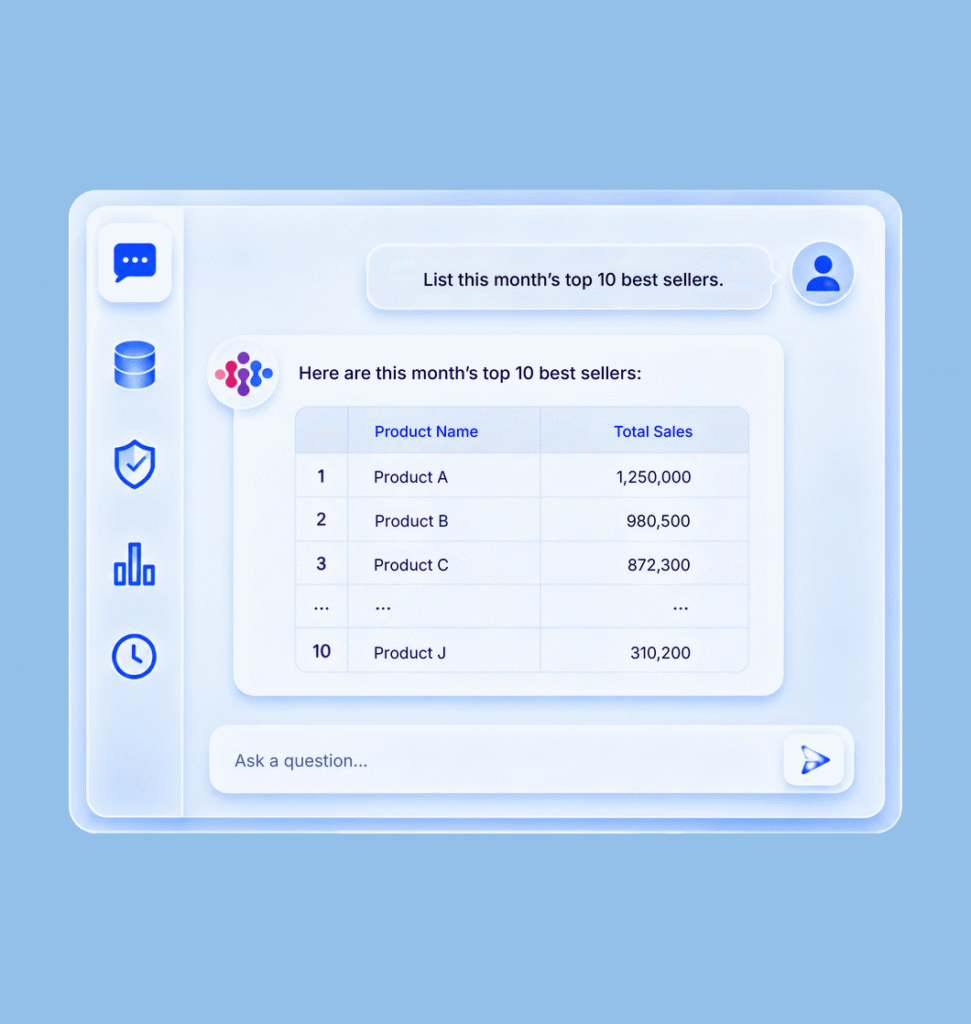
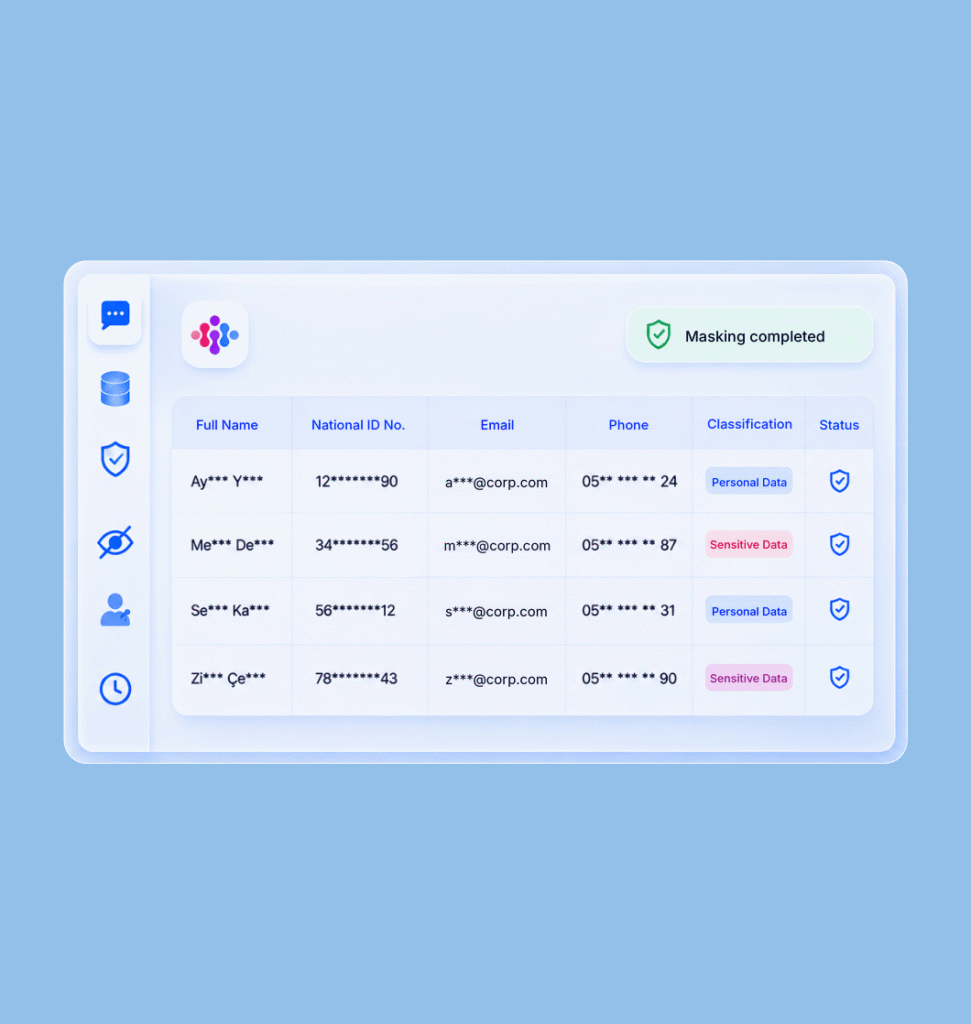
InspireAI Data Masking focuses on identifying and classifying personal and sensitive information in enterprise data sources, and masking it according to rules suited to its intended use. Secure data use in test and development environments and role-based data visibility are among the needs this solution addresses.
At InspireIT, we first assess your organisation’s use case and existing data infrastructure, then work with you to define the necessary integrations, access rules, and implementation scope.
We manage your entire AI transformation process end to end, from assessing your organisation’s AI readiness to implementation and ongoing support. We help you develop secure, scalable solutions that deliver measurable business value.
Contact us to discuss the right solution for your project.